

Best time to buy a new mobile phone
Last updated: October 27, 2026
Key Takeaways
- Wait for clearance on last generation’s stock, not a fresh launch, if you want better value.
- Major sales and model-cycle endings usually bring the lowest prices.
- Aim for a phone that is still current, but priced below the headline model.
- If you can wait 2 to 6 weeks, a sale can be worth watching.
The best time to buy a new mobile phone is often during sales tied to new model releases, holiday promotions, and back-to-school deals, with older models frequently getting the sharpest discounts when a replacement is close. If you want the newest phone on day one, that timing rule changes; if you want the best value, patience usually helps. In this guide to the best time to buy a new mobile phone, the focus is on getting the right model at the right price.
The simple answer: buy when the old model is being cleared out
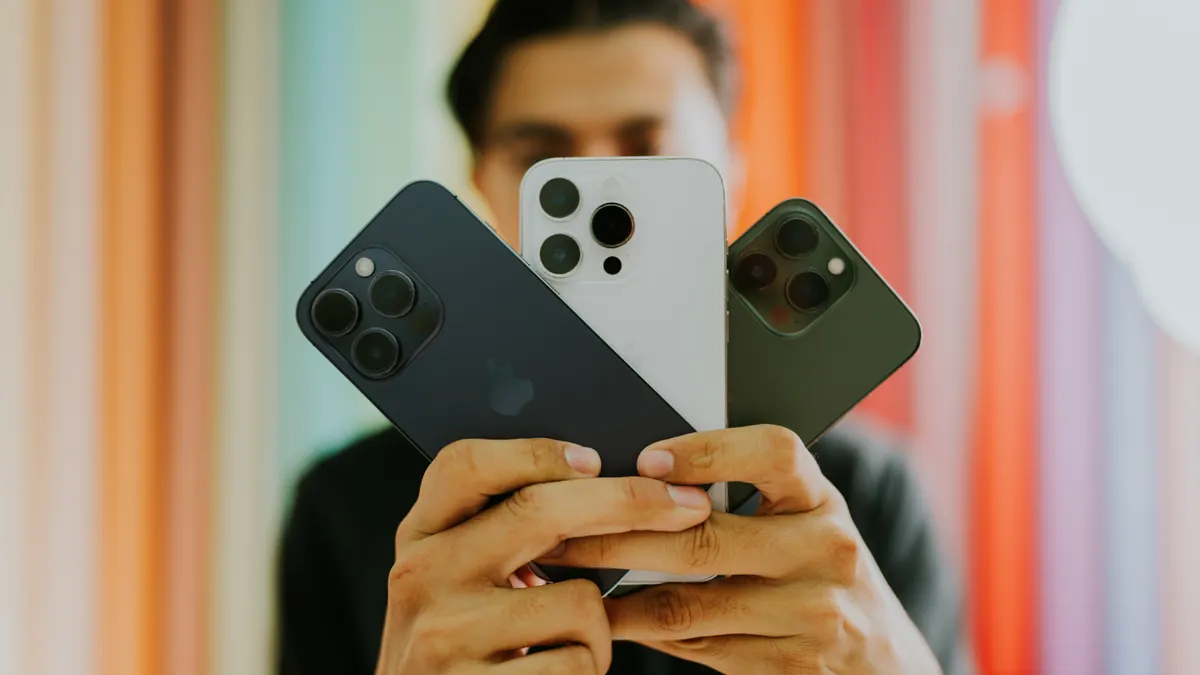
The best time to buy a new mobile phone is often when retailers are trying to move last generation’s stock, not when a phone has just launched. That usually means the weeks after a major new model release, the holiday sales period, and late-summer back-to-school promotions.
That pattern matters because phone pricing follows a predictable cycle. New phones arrive at full price, then the previous model tends to get discounted once the replacement is visible on shelves. Carrier stores, big-box retailers, and online shops often use the same playbook: make the new model the headline item, then cut the older one to keep it moving. For buyers comparing latest mobile phones, that cycle is where the savings usually appear.
A practical rule helps here. If the phone you want launched recently, paying full price can be the least attractive option unless you need the newest camera, chipset, or battery feature right now. If the phone is one generation old and still supported with software updates, it often offers the better value.
This page is about timing, not picking the newest device. For that, the hub on latest mobile phones is the place to start. Here, the question is simpler: when does the same phone usually cost less?
| Buying window | Typical price pressure | What to expect |
|---|---|---|
| Launch month | Highest | Full price, few discounts |
| 1–3 months after launch | Moderate | Small promotions, limited flexibility |
| After the next model is announced or shipped | Lower | Better clearance offers |
| Holiday or back-to-school sales | Lower to lowest | Wider spread of promotions |
When are phones cheapest?
Phones are usually cheapest during major retail sales and at the end of a model’s cycle, especially when a new version is already on the market. The most reliable discount windows are holiday sales, back-to-school deals, and clearance periods after launches.
Holiday sales are the easiest to spot. In many markets, Black Friday and end-of-year promotions bring visible price cuts, bundled gift cards, or trade-in boosts. Back-to-school periods are useful too, especially for midrange models and carrier deals aimed at students and families. Those offers do not always beat every holiday deal, but they often come close. For shoppers checking sales against broader retail timing, Consumer Reports and The Verge regularly track device promotions.
The other good window is the end of the cycle. Once a manufacturer has moved attention to the next model, the older one becomes easier to discount without hurting the new launch too much. That is the moment when you see the “last year’s model” effect.
A useful way to think about it is this:
- Launch month: highest prices, least discounting
- 1–3 months after launch: small promotions, limited flexibility
- After the next model is announced or shipped: better clearance offers
- Holiday and back-to-school periods: widest spread of promotions
That does not mean every phone drops hard at the same time. Flagship phones, midrange phones, and budget phones follow different patterns. Flagships usually see the clearest launch-to-clearance shift. Budget phones may already start low, so the “discount” is smaller in dollar terms even if the percentage looks larger.
If the goal is to save money, the sweet spot is usually not a mystery date on a calendar. It is the overlap between a newer model arriving and a retailer needing to move older stock.
How to time your purchase step by step

You can time a mobile phone purchase by checking the launch cycle, watching the first round of promotions, and comparing the older model against the new one over a 2- to 8-week window. The result you want is a phone that is still current, but no longer priced like the headline product.
-
Identify the model family you want.
Pick the exact line, such as a current iPhone, Galaxy S, Pixel, or a midrange series like a Galaxy A model. The timing only makes sense if you know which family you are tracking. If you are narrowing a choice, our mobile phone buying guide can help you compare features before you wait for a deal. -
Check where the phone sits in the release cycle.
If the latest model has just launched in the last few weeks, expect the least room for price cuts. If the previous model is still sold new, that is the version most likely to see discounts. -
Watch for the first promotion window.
Set a 14-day or 30-day price check period around big retail events such as holiday sales or back-to-school deals. Early offers may come as carrier bill credits, trade-in bonuses, or accessory bundles rather than a lower sticker price. -
Compare the old and new model side by side.
If the newer version only adds small changes you do not care about, the older model can be the smarter buy when its price drops. If the new model fixes a problem you have, like battery life or camera zoom, the premium may be worth it. -
Check support and availability before buying.
Make sure the older model still has years of software support and that storage size, color, and carrier version are still in stock. A deeply discounted phone is less useful if you cannot get the configuration you need. Apple’s iPhone support pages and Google’s Pixel support help are useful for checking update support. -
Buy when the discount is real, not staged.
Some offers look like savings but only work with a trade-in, a long carrier contract, or a bill credit spread over 24 or 36 months. If you want a clean purchase, compare the outright price first. Samsung and Apple both list current pricing directly, which makes it easier to judge whether a retailer offer is genuine.
This method avoids the common trap of waiting forever for the perfect deal. A phone that is $50 cheaper but has the wrong storage, the wrong band support, or a bad carrier lock is not actually a better buy.
Should I wait for a sale to buy a phone?
Yes, if you can wait at least 2 to 6 weeks, a sale is usually worth it for a new mobile phone. The savings do not appear every day, but they often show up at known retail moments: holiday sales, back-to-school deals, and launch-season clearance on older models.
The real trade-off is time versus certainty. If your current phone is working and you are not chasing a specific release, waiting usually improves your odds of getting a better price or a better bundle. If your phone is failing, the value of a discount can disappear quickly because a dead battery, broken screen, or unreliable charging port has its own cost. Consumer guidance from Wirecutter and CNET often reaches the same practical conclusion: wait when you can, but do not over-wait if your device is failing.
A sale is most useful when you already know the model you want. That is different from waiting with no target. A shopper who does not have a model in mind can spend months watching discounts and still buy a phone that is wrong on storage or screen size.
A few sale types deserve different treatment:
- Straight price cuts are the easiest to understand.
- Trade-in deals can look strong, but the credit depends on the old phone’s condition.
- Carrier promotions can be good for people who plan to keep the same network for 24 months or longer.
- Bundle offers can help if the extras are things you would buy anyway, like earbuds or a case.
The best sale is the one that lowers the actual amount you pay without trapping you in a plan you do not want. A 36-month bill credit is not the same as a lower phone price.
Should you buy before or after a launch?
You should usually buy after a launch if you want value, and before a launch only if you specifically need the current model now. After a launch, older models are the ones most likely to get discounts, while the new model carries the fresh-release premium.
This is the part many generic buying guides blur together. A phone launch does not automatically make every device expensive. It makes the newest one expensive and the previous one more negotiable. That distinction is the whole game.
Buying before a launch makes sense in a narrow set of cases. Maybe your current phone is failing, the model you want is already discounted, and you do not care about the next version. In that case, waiting can be a bad move if the launch brings no meaningful benefit to you. The downside is obvious: you may pay more for the outgoing model than someone who buys the same phone a few weeks later.
Buying after a launch is usually better for:
- Shoppers who want the best value, not the newest badge
- People open to last year’s flagship
- Buyers who care more about price than peak specs
- People who want a specific current model before it disappears
- Shoppers who dislike stock shortages in popular colors or storage sizes
- Anyone whose old phone is failing and cannot wait
A release calendar is not a promise. Some launches create quick discount windows; others do not. But in general, the launch itself is the price peak, and the period after it is where value starts to improve. For readers tracking launch timing, our mobile phone deals page updates current promotions.
Which discounts are worth taking and which are not?
The best discounts are plain price cuts and honest clearance deals on older models; the worst are long carrier credits that look cheap upfront but lock you in for 24 or 36 months. That is the difference between a real saving and a spreadsheet trick.
A clean discount usually has three traits. It lowers the price immediately, it does not require you to surrender a perfectly good trade-in, and it leaves you free to choose your carrier or payment method. Those offers are common during holiday sales and at the end of a product cycle.
Discounts to treat carefully include:
- Trade-in deals with vague condition rules. The value can drop if the old phone has scratches, battery wear, or a cracked back.
- Carrier bill credits. These often spread savings out over 24 or 36 months, so the deal only works if you stay put.
- “Free” phone offers. Free usually means the cost moved into the monthly plan.
- Accessory bundles. A case and charger can be useful, but only if you wanted them anyway.
A simple test helps. Ask whether the deal would still feel good if the phone were sold unlocked and cash-priced with no extra conditions. If the answer is no, the discount is probably doing too much work.
This matters more on expensive flagships than on budget phones. A $100 or $200 discount on a premium model can be meaningful; a bundle of extras on a cheap model may just hide the real price. The right deal is the one that fits your buying style. Retailers like Best Buy and Amazon are often where those price differences show up first.
The mistakes that cost people the most money
The biggest mistake is buying the newest mobile phone at launch when the older version would do the same job for less. That mistake costs you the most because you pay the highest price for the shortest period of exclusivity.
The second mistake is waiting too long for a perfect discount and missing the window where the model you want is still in stock. Popular colors, higher storage tiers, and unlocked versions can disappear quickly during holiday sales. The cost is not just price; it is settling for a weaker configuration or paying more later.
The third mistake is chasing a percentage instead of the actual out-of-pocket cost. A 30% discount on a phone with a complicated trade-in requirement may be worse than a smaller upfront cut on a simpler offer.
The fourth mistake is ignoring support. If you buy an older model too late in its life, you can save money now and lose value later if software support is shorter than you expected. That does not make the phone bad; it makes the timing wrong for a long-term owner.
A fifth mistake is buying during a sales event just because the banner says “limited time.” Promotions repeat. The urge to act now often costs more than waiting a week to compare the same model across two retailers.
If you only remember one thing, remember this: the best time to buy a new mobile phone is when the model you want has become yesterday’s news but is still a current, supported phone. That is where the best combination of price, availability, and usefulness usually lives.
The verdict: the best buying window depends on the phone you want
The best time to buy a new mobile phone is often after the newest model has launched and during a major sale window, especially holiday sales, back-to-school deals, or end-of-cycle clearance on older models. That timing gives you the strongest chance of getting a current phone without paying launch pricing.
If you want the newest flagship the moment it appears, there is no bargain timing to chase. You buy early and accept the premium. If you want the best value, wait for the older model to lose the spotlight. That is where the real discounts live.
A phone purchase is easier when you stop asking, “What day is cheapest?” and start asking, “Which model is about to be replaced?” That question points to the right weeks on the calendar far better than any single date.
When are phones cheapest?
Phones are usually cheapest during holiday sales, back-to-school promotions, and the period after a newer model is released. The deepest value often shows up on older models that are still new, still supported, and no longer the main thing retailers are trying to sell.
Should I wait for a sale to buy a phone?
Yes, if you can wait a few weeks and your current phone still works. Waiting often improves the odds of a better price, a better bundle, or a cleaner deal on an older model. If your phone is failing, though, the savings may not be worth the delay.
Is it better to buy before or after a launch?
It is usually better to buy after a launch if you care about price. Launches tend to push attention and pricing toward the newest model, while the previous one becomes easier to discount. Buy before a launch only if you need the current phone right away or the outgoing model is already at a price you like.
Drafted with AI; not yet reviewed by a person.