
How Hardware Tier and Premium Components Raise Phone Prices
Last updated: November 27, 2026
Quick answer: in most phones, four parts drive the biggest price jumps—chipset, display panel, camera module, and frame materials. In the topic of how hardware tier and premium components raise phone prices, those four parts usually explain the largest part of the bill of materials, and the rest of the phone is often built around them. If you are trying to judge whether a phone is priced fairly, look at those four parts first, then decide whether the extras match what you need.
Key takeaways
- A phone gets more expensive when its parts are harder to make, harder to assemble, or bought in a higher spec tier.
- The chipset can push price up before the rest of the phone even changes, because it sets the ceiling for performance and often the rest of the parts around it.
- Displays and camera modules can add a lot of cost because they use specialized panels, lenses, sensors, and tighter assembly.
- Premium materials such as metal frames and glass backs cost more to source and build into the phone than plain plastic.
- The best value is usually the phone whose hardware tier matches the way you use it, rather than the one with the highest spec sheet.
What parts make a phone cost more?
The chipset, display panel, camera module, and frame materials are the main parts that push a phone price higher. Those four pieces usually drive most of the bill of materials, which is the parts cost before marketing, software, logistics, and retailer margin are added.
A phone at a higher hardware tier often uses a faster chipset, a brighter or higher-refresh display panel, more camera hardware, and a more expensive frame. Each part can raise the cost on its own, but the price jump is usually larger when several premium parts show up together. A model with a top-end chipset and a strong camera system almost never lands in the same price band as a phone that uses a midrange chipset and a basic panel.
That is why two phones that look similar from the outside can sit far apart in price. A plain design can hide expensive silicon, a better OLED panel, or a more complex camera stack. If you are comparing phones on a store page, the outside finish is not enough. The hardware tier is what usually explains the price gap.
The mobile phone hardware bill of materials matters because it is the cleanest way to see where the money goes. It also helps explain why a “small” upgrade, such as a better display or an extra camera sensor, can move the sticker price more than expected.
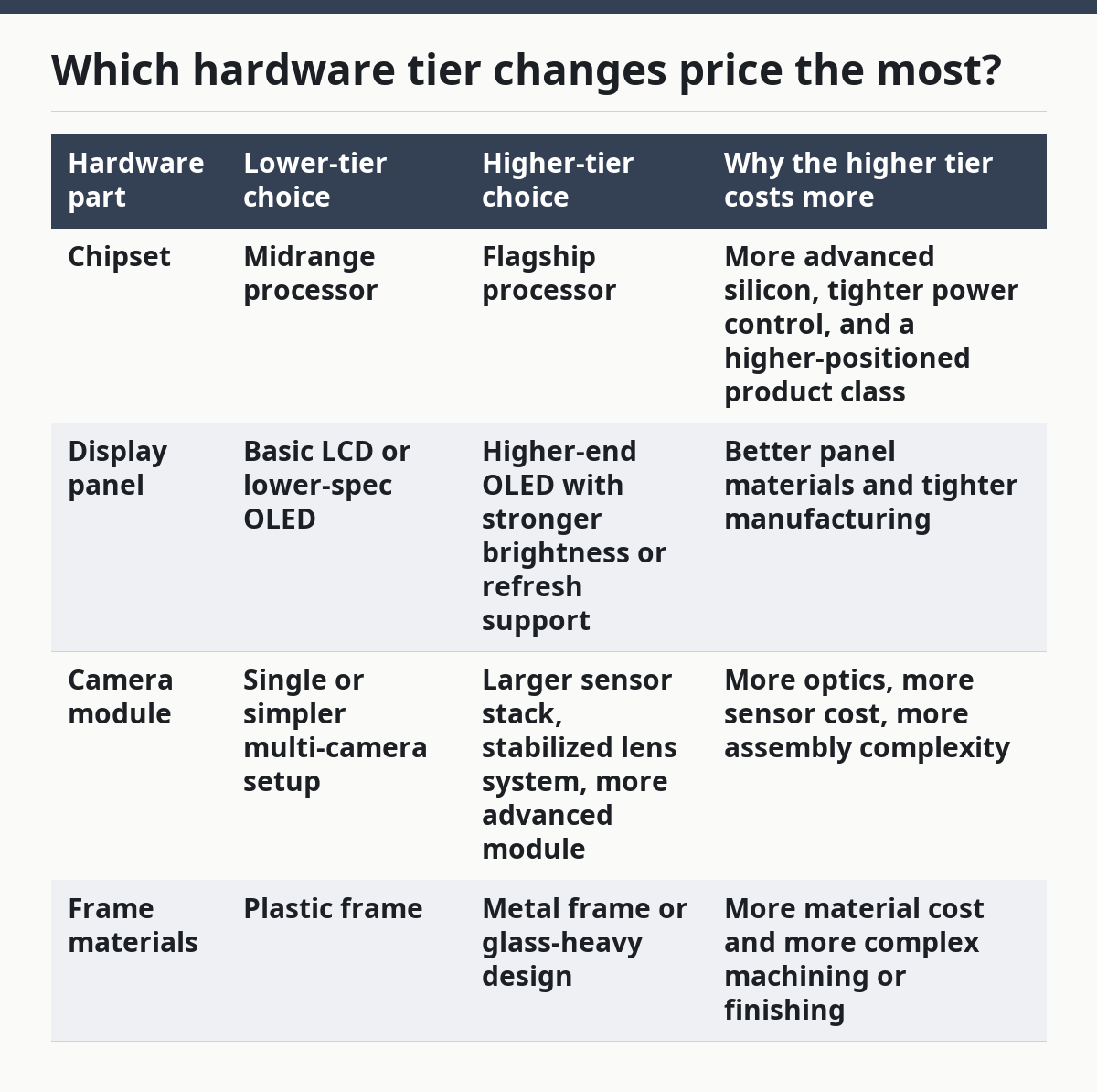
Which hardware tier changes price the most?
The chipset tier usually changes price the most, then the display panel and camera module, with frame materials close behind in phones that use premium builds. That order is not fixed for every model, but it is the pattern that most buyers run into.
| Hardware part | Lower-tier choice | Higher-tier choice | Why the higher tier costs more |
|---|---|---|---|
| Chipset | Midrange processor | Flagship processor | More advanced silicon, tighter power control, and a higher-positioned product class |
| Display panel | Basic LCD or lower-spec OLED | Higher-end OLED with stronger brightness or refresh support | Better panel materials and tighter manufacturing |
| Camera module | Single or simpler multi-camera setup | Larger sensor stack, stabilized lens system, more advanced module | More optics, more sensor cost, more assembly complexity |
| Frame materials | Plastic frame | Metal frame or glass-heavy design | More material cost and more complex machining or finishing |
A higher-tier chipset does more than improve raw speed. It can also force the phone maker to choose better cooling, a stronger battery layout, or a different board design. Those changes add cost even when they are not obvious in the spec sheet.
The display panel can also move price fast. A panel that supports better brightness, smoother motion, or better color usually costs more than a basic panel. The same is true for camera hardware. A phone with a more advanced camera module needs more parts around the sensor, not just a bigger number on the box.
Frame materials matter because they change both the material bill and the build process. A plastic shell is cheaper to shape. A metal frame or glass back needs more care in cutting, finishing, fitting, and quality control.
For buyers comparing phone specs, those tier changes are often the clearest clue that the price is about more than branding.
How does a premium chipset raise the price?
A premium chipset raises the price because it is the engine the rest of the phone is built around. Better processors usually sit in a higher product class, and that class comes with higher part cost, tighter thermal needs, and a more expensive supporting design.
Here is the simple chain:
- Choose a higher-tier chipset. The phone maker starts with a more expensive processor package.
- Match it with better supporting parts. The board, cooling path, memory, and power setup often need to be upgraded too.
- Absorb a higher assembly cost. More advanced parts often need more care in placement and testing.
- Set a higher retail price. The maker has to recover the higher parts cost and still keep margin.
That is why “better chip” and “higher price” usually travel together. A phone with a flagship chip is not just paying for one chip. It is paying for the product position that chip signals and the extra hardware around it.
This is also where buyers can overspend. A stronger chipset is worth it if you run heavy games, edit video, or keep a phone for a long time and want more headroom. It is less useful if your main tasks are calls, messaging, maps, and a few apps. In that case, the higher chipset can raise price without changing daily use enough to justify the jump.
The hard truth is that a better chipset is often the most visible reason a phone costs more, but it is not the most useful reason for every buyer.
Why do premium display panels cost more?
Premium display panels cost more because they use better parts, tighter tolerances, and more demanding manufacturing than basic panels. A phone display is not just a screen; it is one of the most expensive single components in the device.
A higher-end display panel may bring a better OLED structure, higher brightness, smoother refresh behavior, or thinner layers that improve the look of the phone. Those changes add cost in two ways. First, the panel itself is pricier. Second, the phone maker has to build the phone around that panel so it fits, bends, and seals the way it should.
A generic article usually misses this part: the display cost is not only about the visible image. It also affects how the front of the phone is built. A premium panel can change the bezel shape, the internal support frame, and even the way the battery and board are arranged. Those are hidden costs, but they show up in the retail price.
This is also why the jump from basic to premium can feel steep even when the rest of the phone looks similar. The front of the phone takes a lot of wear, so panel quality matters to manufacturers. Better panels are harder to source and harder to replace in the supply chain, which keeps the price up.
For display comparisons, the main question is panel class, not only screen size. A larger screen is not always the main cost driver. The panel class is.
The display supply chain is one reason premium panels can stay expensive from one model cycle to the next.
Why do premium materials cost more?
Premium materials cost more because they are harder to source, harder to shape, and harder to fit into a finished phone. A plastic frame is usually cheaper to make than a metal frame, and a more complex glass-and-metal build usually costs more than either one.
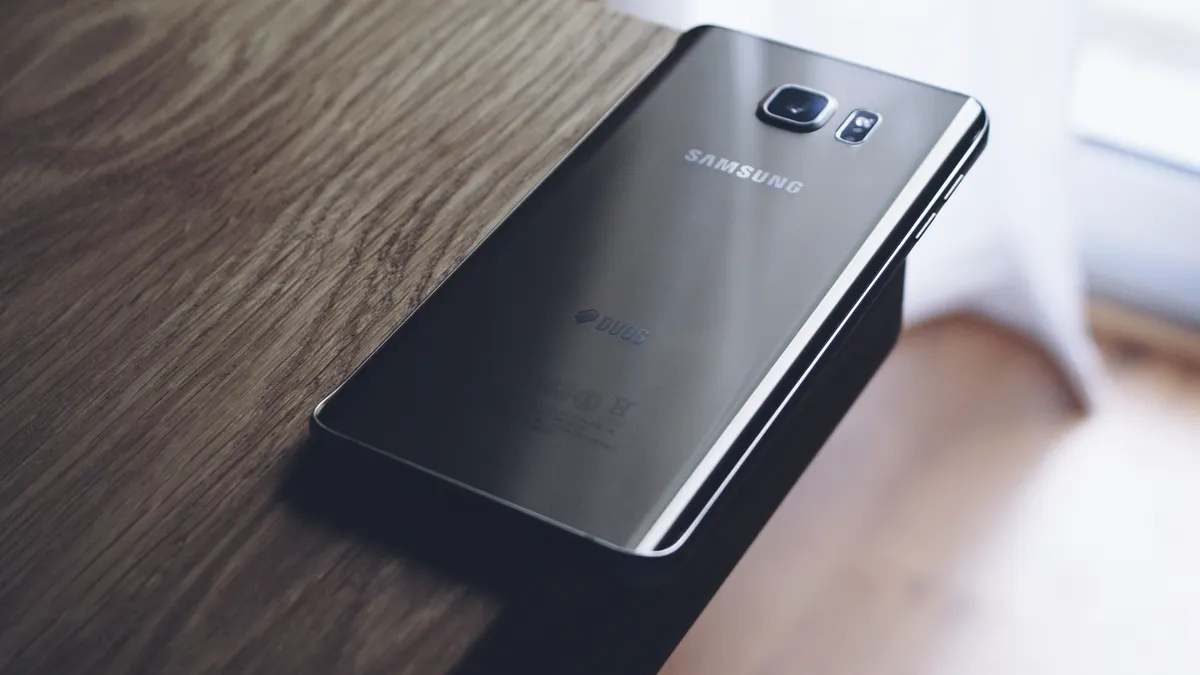
There are three cost layers here. First is the raw material itself. Second is the work needed to machine, mold, polish, or coat it. Third is the extra assembly care needed to make the phone look and feel consistent. A metal frame with a clean finish needs tighter production control than a plain plastic shell.
A premium back or frame can also create a chain reaction inside the phone. The maker may need different antenna placement, different structural support, or different sealing methods. That does not just change looks. It changes the build process, which raises cost again.
This is why premium materials are not only a style choice. They are part of the hardware tier. A phone with a glass back and metal frame often sits above a plastic-bodied model even if the chip and camera are close. The outside finish is part of the product cost, not decoration.
There is a trade-off, though. Premium materials can feel better and often look more expensive, but they do not always make the phone a better buy. If a buyer wants lower cost and a lighter phone, plain materials can be the smarter choice.
For a closer look at build choices, see phone build materials and how they affect both feel and cost.
What should you pay for, and what should you skip?
You should pay for premium hardware only when it changes how the phone works for you, and you should skip it when it only changes the spec sheet. That is the cleanest way to avoid overpaying for hardware tier.

Use this quick decision order:
- Start with the chipset. If you need heavy performance, pay here first. If not, a midrange part may be enough.
- Check the display panel. Spend more only if screen quality matters to your daily use.
- Look at the camera module. Pay for better camera hardware only if photos are a main reason you are buying the phone.
- Judge the frame materials last. Metal and glass feel premium, but they are not the first place to spend extra money unless build feel matters to you.
This order keeps the price conversation grounded. A phone can be expensive because every part is premium, or because one expensive part is carrying the whole model upward. The first case may be fine if you want a top-tier device. The second case can be poor value if the phone is expensive for reasons you do not care about.
Two authoritative places to keep in mind when you want to understand the parts behind the price are JEDEC, which sets memory and storage-related standards used across electronics, and Display Supply Chain Consultants (DSCC), which tracks display panel classes and market shifts. Those names matter because phone pricing is tied to component standards, not just branding.
For a buyer, the key is not to chase the highest tier on every line of the spec sheet. A phone priced for a flagship chipset, premium display panel, advanced camera module, and metal frame will cost more for a reason. The real question is whether those reasons match the way the phone will be used.
How do you spot a price gap before you buy?
You spot a price gap by comparing the hardware tier, not the marketing label. That means looking past “Pro,” “Ultra,” or “Plus” and checking the actual chipset class, display panel type, camera module layout, and frame materials.
A phone can look like a small upgrade on the store page and still cost much more because the hardware moved up one tier in several places at once. That is common in phone lineups. The maker often saves the biggest price jump for a model that upgrades the processor, the display, and the camera together.
One easy way to read the price gap is to ask what changed that you can feel every day. A better chipset affects app load, multitasking, and gaming. A better display affects what you see every time the screen wakes. A better camera module matters if you use the camera often. A premium frame mostly changes the feel in hand.
That last point is where many buyers lose money. They pay for a more expensive finish because it signals quality, not because it changes the use of the phone. If the goal is value, the smartest move is to pay for the parts that change your day and ignore the parts that only change the spec sheet.
For a quick check, compare the camera module, chipset tier, and frame materials before you compare the brand name.
The mobile phone hardware bill of materials is the real map here. Once you learn which parts sit at the top of the cost stack, the retail price stops looking random.
Drafted with AI; not yet reviewed by a person.