
How to Compare Mobile Phone Screen Protectors and Coverage Types
Last updated: November 20, 2026
Quick answer: for most people, choose 1 of 3 options—tempered glass, PET film, or a privacy screen protector—and then match the coverage to the phone’s screen shape and case. In the topic of How to Compare Mobile Phone Screen Protectors and Coverage Types, the usual starting point is tempered glass, because it balances scratch resistance, touch feel, and day-to-day convenience. The real choice is not just material; it is also coverage: case-friendly, edge-to-edge, or a cut that stops short of curved parts.
Key takeaways:
- Tempered glass is the default choice for most buyers because it keeps a phone feeling close to bare glass.
- PET film is slimmer and lighter, but it gives up the solid, glass-like feel many people want.
- Privacy protectors solve one problem well, then ask for trade-offs in brightness and viewing angle.
- Coverage style matters as much as material on phones with curved edges or tight cases.
- The safest buy is usually the protector that matches the screen shape and the way the phone is carried every day.
A screen protector looks like a tiny accessory, but it changes three things that matter: how the screen feels, how much of the glass is covered, and how much everyday glare or side viewing becomes a problem. This guide compares tempered glass protector, PET film, and privacy screen protector so the right one is obvious before checkout. For related buying context, see the mobile phone buying strategy guide and the mobile phone total cost guide.
What matters most when choosing a screen protector?
The first comparison in How to Compare Mobile Phone Screen Protectors and Coverage Types is between material, coverage, and fit. Material, coverage, and touch feel do most of the work; fancy packaging does not. A protector that covers 100% of the display area on paper can still fail if a case lifts its edge on a curved screen.
The first comparison should be between tempered glass and PET film because those two options change the experience the most. Tempered glass usually adds a harder, glass-like surface that feels closer to the bare screen. PET film is thinner and less noticeable, but it usually feels softer and less premium under a finger. For a deeper look at phone hardware choices, compare this with the mobile phone buying strategy page.
Coverage type changes the decision just as much. Case-friendly protectors stop short of the very edge, which helps them work with most cases. Edge-to-edge styles aim for more full coverage, but they can be more sensitive to lifting on screens with curves. That trade-off matters on modern phones more than on older flat-screen models.
The safest rule is usually to choose the material first, then choose the coverage that matches the phone case and the screen shape. That order helps avoid one common mistake: buying a protector that looks complete but may not stay put. If the phone has a difficult curve or a tight case, consult the phone maker or a repair professional before choosing a rigid edge-to-edge protector.
Tempered glass protector: who should buy it?
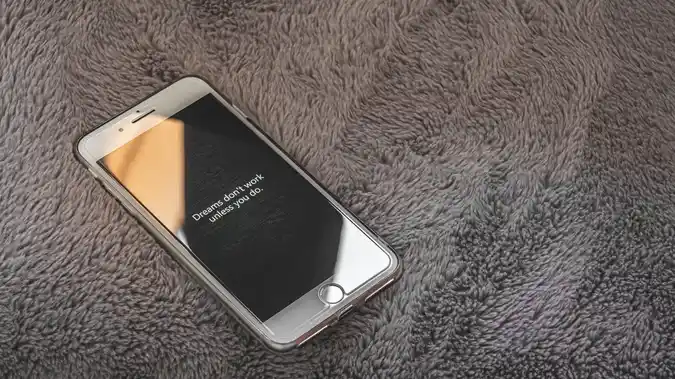
A tempered glass protector is the best default choice for many phone owners because it gives the most familiar feel and the clearest “glass-on-glass” experience. It is the option to choose when the phone is used all day for tapping, scrolling, typing, and video. A reader who wants the screen to still feel like a phone screen usually lands here. Corning’s Gorilla Glass materials are widely used in phones, which is one reason glass-on-glass feel remains a common benchmark in the category. See Corning Gorilla Glass.
Its main strength is touch feel. A 0.3 mm glass layer, when that is the maker’s stated thickness, stays closer to the original screen than a thicker plastic sheet would. It also tends to resist visible scuffs better than softer film. That matters for people who keep keys, coins, or grit in the same pocket as the phone. According to Apple’s support guidance on cleaning iPhone, abrasive contaminants can scratch glass surfaces, which is why surface hardness still matters in daily use. See Apple Support.
The weakness is fit. Tempered glass can be less forgiving on curved screens and around case lips. If the protector stops too close to the edge, a case can press on it; if it extends too far, the edge can lift. Some readers see that as a small annoyance, but on a phone that lives in a tight case, it becomes the main problem.
Pros:
- Better glass-like feel than PET film
- Good everyday scratch protection
- Usually easier to align than very thin film
- Better choice for people who care about touch response
Cons:
- Can lift on curved edges or with bulky cases
- More visible than film if the cut is not exact
- Can be the wrong choice if the phone has a very rounded display
Who should buy it: people with flat or lightly curved screens, a standard case, and a strong preference for touch feel. Who should skip it: anyone whose phone has a highly curved edge and already struggles with case fit.
PET film protector: when does it make sense?
PET film makes sense when thinness matters more than the glass-like feel of the screen. It is the low-profile option, and that is its biggest selling point. A reader who hates the extra presence of accessories on the screen will usually prefer this type over tempered glass.
Its advantage is fit. Because PET film is thinner and more flexible, it can be easier to live with on awkward screen shapes and under tighter cases. That makes it useful when a phone has a shape that does not suit rigid glass. It also tends to disappear more quietly visually, which appeals to people who want the least noticeable layer possible.
The weakness is the trade-off the buyer can feel immediately: it does not usually deliver the same hard, solid touch as tempered glass. That can matter during fast typing or gaming, where finger glide becomes obvious. PET film is also less convincing for readers who want the screen to feel protected from hard contact.
Pros:
- Thinnest, least noticeable option
- More forgiving fit on some curved screens
- Good match for people who dislike bulky accessories
- Can work well with tighter cases
Cons:
- Softer feel under the finger
- Less glass-like than tempered glass
- Usually not the first pick for people who want a premium touch experience
Who should buy it: people who care more about slimness and fit than about a rigid surface. Who should skip it: anyone who wants the screen to feel as close as possible to bare glass.
Privacy screen protector: when is it worth the trade-off?
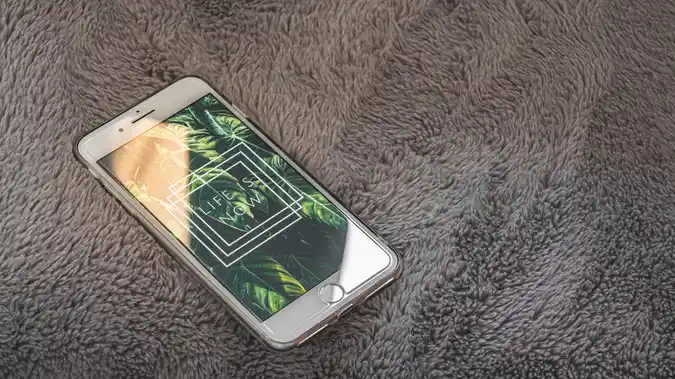
A privacy screen protector is worth it when side-view blocking matters more than brightness or wide viewing angles. It is the right pick for commuters, people who read messages in public, and anyone who does not want nearby seats to see the screen. The main point is simple: it narrows what people beside the phone can read.
That benefit comes with a real cost. Privacy filters usually make the screen less friendly when viewed from off-center, and that can also make the display feel darker or more constricted even to the owner. On a bright day, that trade-off can be hard to ignore. The screen may still be perfectly usable, but it will not look as open as a standard protector.
Privacy protectors also narrow the audience. They solve a privacy problem, not a general protection problem. A reader who only wants scratch resistance is usually paying for a feature that adds friction without adding much value. That is why privacy is a specialty choice, not the default.
Pros:
- Blocks side viewing in public settings
- Useful for commuting and shared spaces
- Still serves as a screen protector, not just a visual filter
Cons:
- Reduces viewing angle
- Can make the screen seem dimmer or narrower
- Not a good fit for people who value bright, wide-screen viewing
Who should buy it: people who often use their phone where strangers can glance over a shoulder. Who should skip it: anyone who watches a lot of video, uses the phone for sharing content, or wants the brightest possible display.
How does coverage type change the choice?
Coverage type changes the choice because it determines whether the protector works with the phone’s shape and case, not just the screen itself. A case-friendly cut and an edge-to-edge cut can both be “full coverage” in marketing terms, yet they behave differently on the phone. This is where many buyers make the wrong call.
Here is the clean side-by-side comparison:
| Criteria | Tempered glass protector | PET film protector | Winner for [condition] |
|---|---|---|---|
| Touch feel | Close to bare glass, especially on flat screens | Softer and thinner | Tempered glass for typing and gaming |
| Screen shape fit | Better on flat or lightly curved screens | More forgiving on awkward curves | PET film for tricky curves |
| Case compatibility | Can lift with some bulky cases | Usually easier under cases | PET film for tight cases |
| Visual presence | More noticeable at the edge | Least noticeable | PET film for minimal look |
| Scratch resistance feel | Harder surface for daily contact | Softer surface | Tempered glass for pocket carry |
| Easy alignment | Usually easier to place cleanly | Can be fiddlier because it is thin | Tempered glass for fast installation |
| Coverage style | Often sold in case-friendly and edge-to-edge cuts | Often cut to stay discreet | Case-friendly glass for most buyers |
| Privacy option | Available in privacy form too | Less common as privacy-focused | Privacy glass when side-view blocking matters |
| Best overall use | Everyday main pick | Thin, low-profile backup-style pick | Tempered glass for most people |
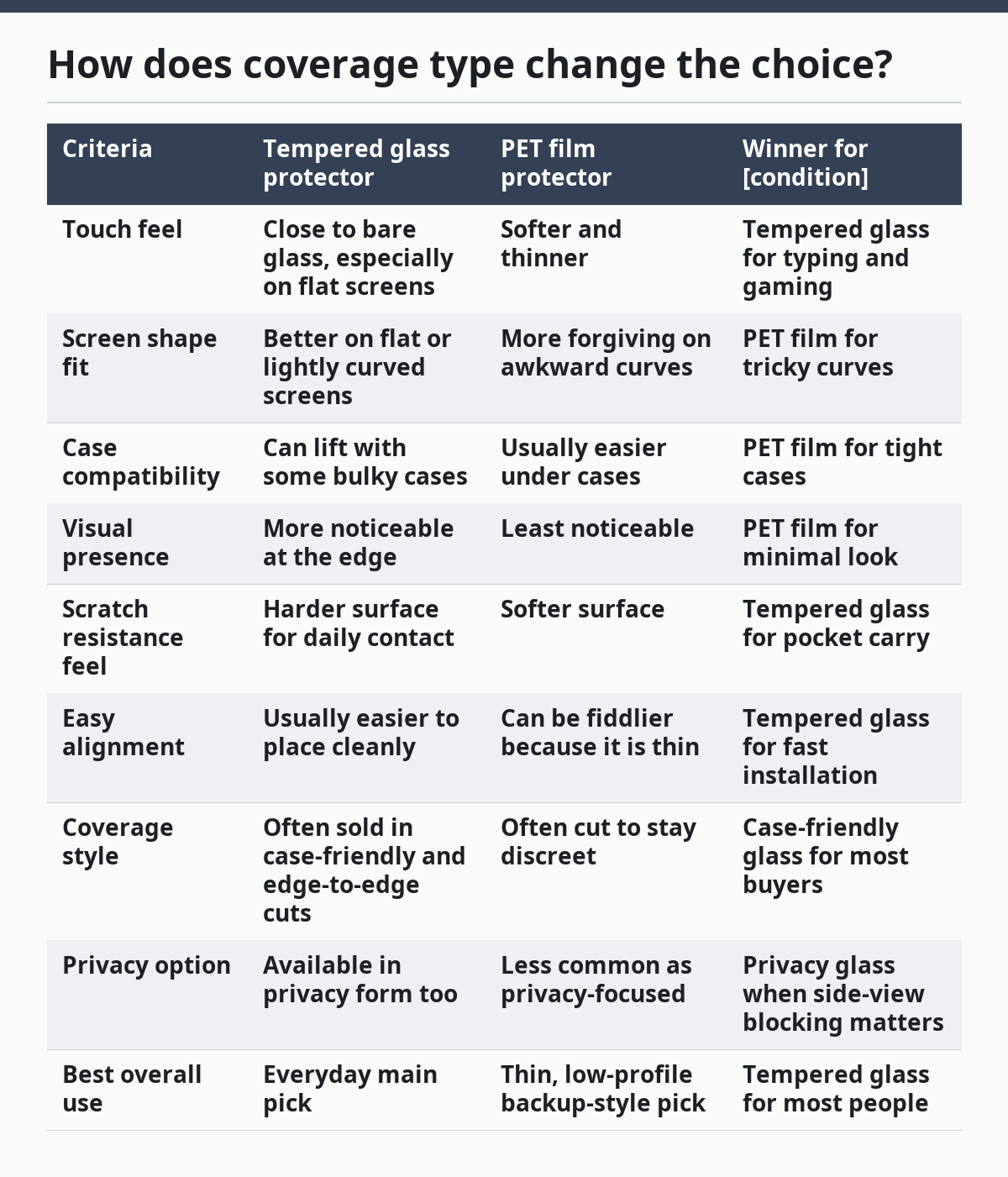
Coverage choice matters most on phones with curved glass. A case-friendly protector is usually the safer buy because it leaves room for the case lip. Edge-to-edge coverage looks cleaner, but if the phone has a pronounced curve, the risk of lifting goes up. That can turn a tidy-looking choice into a short-lived one.
The correct answer is not “always full coverage.” The correct answer is the protector that stays flat, clear, and usable with the case already on the phone. That is why coverage should be matched to the phone model, not copied from a product photo.
The honest side-by-side
Tempered glass wins for many readers because it gives a strong mix of comfort, protection, and daily usability. PET film wins only when thinness or edge fit matters more than feel. Privacy screen protector wins only when the user has a real privacy problem and accepts the trade-off in viewing angle.
If the goal is a protector that disappears into the phone routine, tempered glass is the most common all-around pick. It gives the closest feel to bare glass and suits most people who want one accessory and no more thought. The downside is that its rigid shape can be unforgiving on curved displays and narrow cases.
PET film is the more specialized choice. It works best for someone who wants the slimmest layer and can live with a softer feel. The drawback is obvious in direct use: it does not deliver the same solid touch that many phone buyers expect after spending on a premium handset.
Privacy screen protector belongs in a separate bucket. It is not better protection in general; it is better privacy at the cost of some display comfort. A person who reads and types in public can justify that trade. A person who mostly watches video at home probably cannot.
When should you choose something else?
The recommendation changes in four situations. If the phone has a highly curved screen and the case already sits close to the edge, PET film can be the safer fit. If the phone is used mostly for reading sensitive content in public, a privacy screen protector becomes the practical choice even if it dims the view.
If touch feel matters more than everything else, tempered glass should stay the default. That includes people who type a lot, swipe fast, or want the screen to feel sturdy under the finger. A rigid protector is easier to accept when the phone is used heavily all day.
If the screen protector will be swapped often, or if the buyer wants the least visible layer possible, PET film can be the better compromise. It is not the most premium-feeling option, but it does its job quietly. That is enough for some phones and some users.
If the phone will live in a very tight case, coverage becomes the deciding factor. A case-friendly cut is usually safer than a full edge-to-edge design. That one detail can matter more than the material name on the box.
Which one should you choose?
Choose tempered glass if the phone has a mostly flat screen and you want the best balance of protection, touch feel, and easy daily use. Choose PET film if the screen shape is awkward, the case is tight, or you want the thinnest possible layer. Neither if the phone is already protected by a case that presses hard on the display edge and the protector cannot stay flat.
For most shoppers, tempered glass is the right answer. It is the least fussy choice and the easiest to live with. PET film is the specialist pick. Privacy screen protector is for a specific problem, not for everyone.
The mobile phone buying strategy guide gives the bigger picture on how accessories affect ownership costs, while the mobile phone total cost guide helps frame the long-term trade-off. This page gives the picking rule: match material to feel, and match coverage to the screen shape. When those two line up, the screen protector stops being a guess.
Drafted with AI; not yet reviewed by a person.