
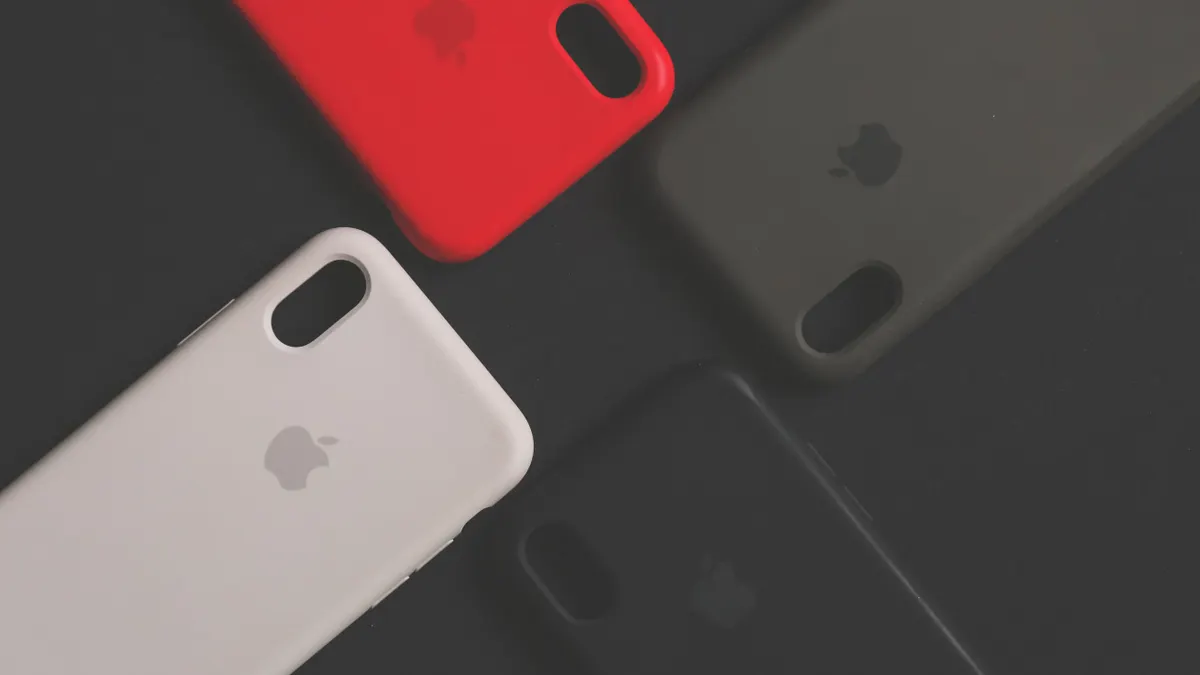
How to Compare Mobile Phone Cases Before You Buy
Last updated: November 20, 2026
Quick answer: compare mobile phone cases on five points — grip, bulk, drop protection, button feel, and wireless charging compatibility — and start with the least bulky case that still fits the phone’s real risk. In How to Compare Mobile Phone Cases Before You Buy, the right choice usually comes down to material, drop protection, thickness, button feel, and whether wireless charging still works through the case. A case that looks good online can still be the wrong pick if it adds too much bulk or blocks the charging pad.
Key takeaways
- Pick the case for the way the phone is used most days, not for the one bad drop you hope never happens.
- Silicone, rugged, clear, and leather cases solve different problems; no single case is best at all four.
- Wireless charging support matters more than many buyers expect, especially if a case is thick or has metal parts.
- Button covers, grip, and edge height change daily use as much as drop protection does.
- The safest choice is often the least flashy one that fits the user’s handling habits.
What should matter most?
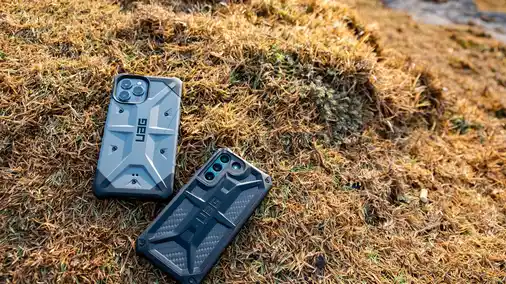
The most important question is how much protection the phone needs versus how much bulk the user will tolerate. A case that survives rough handling but feels too thick will end up left off more often, which defeats the point.
Start with the phone’s real risk: pocket carry, bag carry, desk use, or frequent drops onto hard floors. Then compare the case material, lip height around the screen and camera, and whether the maker says wireless charging still works with the case on. If the listing does not mention charging compatibility, that silence matters.
A useful way to compare any phone case is to ask four things in order: how it grips the hand, how well it cushions corners, how easy the buttons feel, and whether it adds trouble at the charger. The Wireless Power Consortium’s Qi standard matters here because many wireless chargers are built around it, while thicker cases can be hit-or-miss even when the phone itself supports wireless charging. For background on wireless-device concerns, the U.S. Federal Communications Commission also publishes consumer guidance on wireless devices and health concerns.
How do silicone phone cases compare with rugged cases?
Silicone cases win for grip and daily comfort, while rugged cases win for drop protection and corner defense. That split is the main decision point for most buyers.
Silicone cases are usually the better choice for someone who wants a softer hand feel, better pocket slip resistance, and less bulk. They tend to be easier to hold for long periods and often give a better button press than very stiff shells. The trade-off is that softer material can scuff faster, collect lint, and offer less protection if the phone is hit hard on a corner.
Rugged cases are for the person who drops a phone on pavement, tile, stairs, or a worksite table and wants more cushion around the edges. They usually add thicker sides, raised corners, and stronger bump absorption. The downside is weight and size; a rugged case can make a slim phone feel much larger, and some people stop carrying it because it feels bulky.
| Criteria | Silicone case | Rugged case | Winner for [condition] |
|---|---|---|---|
| Hand grip | Soft, grippy feel | Firm, thicker grip | Silicone case for everyday pocket carry |
| Drop protection | Moderate | Higher | Rugged case for frequent drops |
| Bulk | Usually slim | Usually thick | Silicone case for a smaller feel |
| Button feel | Often easier | Can feel stiffer | Silicone case for frequent button use |
| Pocket carry | Usually easier | Less comfortable | Silicone case for slim jeans or small bags |
| Edge protection | Basic | Stronger | Rugged case for corners and raised lips |
| Wireless charging | Often easier | More likely to interfere if very thick | Silicone case for charging pads |
| Best fit | Light, careful users | Rough handling, outdoor use | Depends on risk level |
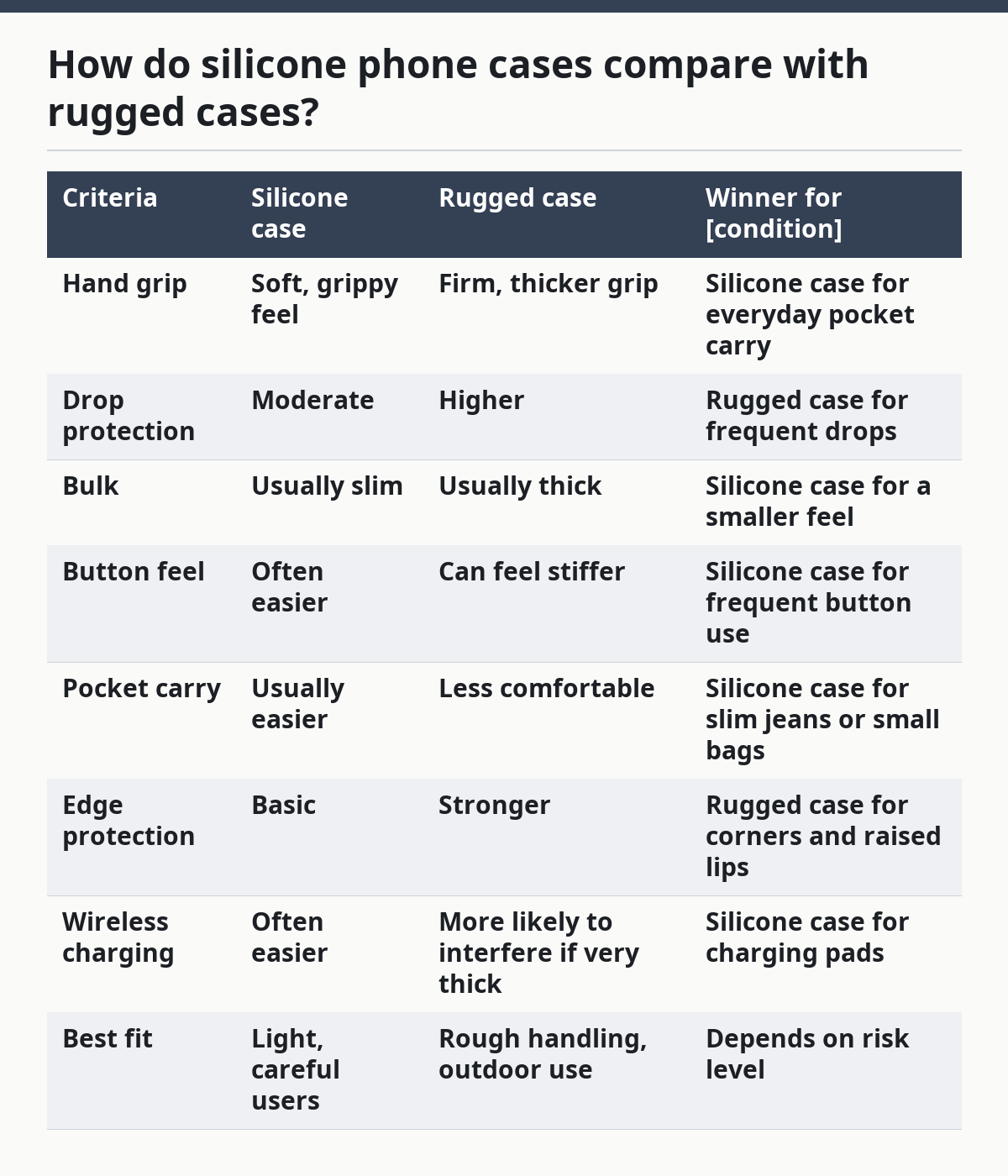
Silicone is the better first buy for most people who want protection without changing the phone’s shape too much. Rugged is the better pick for anyone who values impact protection over comfort. Neither is ideal for someone who wants a case that looks nearly invisible.
Is a clear phone case worth it?
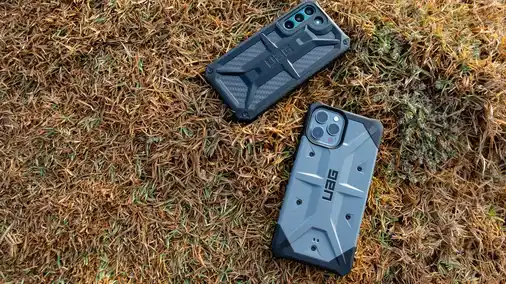
A clear phone case is worth it only if showing the phone matters more than hiding wear and yellowing risk. That makes it a style-first choice with some practical limits.
Clear cases are the obvious pick for people who like the phone’s original color or design and do not want to cover it up. They can also be a good middle ground when someone wants basic scratch protection without a heavy shell. The weakness is that clear material often shows fingerprints, smudges, and long-term discoloration more clearly than other case types.
A clear case usually works best for light to moderate protection, not for rough use. The trade-off is that many clear models focus on looks and slimness, so corners and edges may be less protected than on a rugged case. If the listing says nothing about raised bezels or corner cushioning, the buyer should assume protection is modest rather than strong.
Clear cases suit buyers who keep their phones in clean pockets, use a wireless charger often, and want the device’s finish visible. They are a poor fit for someone who needs the case to hide dirt, survive repeated drops, or stay looking new for a long time. A clear case can be the least satisfying choice for rough daily use because cosmetic wear shows up fast. For more on fit and finish, see our clear vs rugged phone cases page.
When does a leather phone case make sense?
A leather phone case makes sense when the buyer wants a more refined feel and is willing to accept more care and less rugged protection. It is the style-and-hand-feel choice, not the rough-duty choice.
Leather cases often feel better in the hand than hard plastic because the surface is easier to hold and can age in a more natural way. They can make a phone feel less slippery and more premium. The trade-off is that leather is not the best answer for hard drops, repeated abrasion, or wet conditions, and it may show wear differently over time.
This option fits someone who uses the phone mostly in an office, car, or bag rather than on a job site or at the gym. It also suits buyers who want a case that looks less sporty than silicone or rugged options. The weakness is that leather usually asks for more attention, and the buyer has to accept that it may mark, soften, or change appearance with use.
Leather is not the right choice for anyone who wants a hard-wearing, low-maintenance case. It is also a weak match for a buyer who needs the strongest edge protection or the easiest wipe-clean surface. If durability under rough conditions is the priority, leather should drop below silicone and rugged cases on the list.
How much does wireless charging compatibility change the choice?
Wireless charging compatibility can change the choice a lot because a thick or metal-heavy case can make charging less reliable. A case that blocks charging is a daily nuisance, not a small detail.
For a buyer who uses a Qi charger every night, the case should be checked for explicit wireless charging support. That matters most for rugged cases, which are more likely to be thick, and for cases with magnets, metal plates, or layered backs. Slim silicone and many clear cases are usually easier to pair with wireless charging because they add less material between the phone and the charger.
The safe habit is to treat wireless charging as a filter before style, and to confirm it with the case maker, the charger maker, or a qualified retail specialist if the setup is uncertain. The Qi standard from the Wireless Power Consortium is the key reference point for many wireless charging setups, but a case can still cause trouble even when the phone itself is compatible. See the Wireless Power Consortium and the FCC’s consumer guidance for background.
This matters less for buyers who charge only by cable. It matters a lot for anyone who uses a charging stand, bedside pad, or car mount that doubles as a charger. A case that works well everywhere else can still be the wrong case if it makes charging fussy.
Which phone case should most people buy?
Most people should buy a silicone case unless they already know they need rugged protection or a style-led finish. Silicone gives a strong mix of grip, slimness, and day-to-day comfort for many users.
Here is the cleanest way to choose:
- Pick silicone if the phone needs better grip, a slim profile, and easy pocket carry.
- Pick rugged if drops, work use, or rough handling are the main concern.
- Pick clear if showing the phone’s design matters more than hiding wear.
- Pick leather if feel and appearance matter more than maximum impact protection.
Silicone wins for the largest group because it solves the most common annoyance: a slippery phone that feels awkward without adding much bulk. Rugged is the better technical choice for protection, but it is too much case for many people. Clear and leather are more selective choices, which makes them weaker as default buys.
For a reader comparing cases before purchase, the simplest rule is this: choose the least bulky case that still matches the worst thing likely to happen to the phone. If that worst thing is a drop from a desk, silicone may be enough. If it is repeated falls from hand height onto hard floors, rugged is the safer call.
When should the verdict flip?
The verdict flips when the phone faces a special condition that changes the trade-off. In those cases, the normal “silicone first” answer can be wrong.
If the phone is used in a workshop, on a bike, or in an outdoor job, rugged should move to the front because corner protection matters more than slimness. If the buyer keeps the phone in a clean pocket and wants the original color visible, clear can beat silicone for appearance. If the phone lives on a wireless charger all night and the case must be almost invisible in use, a slim silicone or slim clear case is usually better than a thick rugged one.
Another flip happens when button feel matters a lot. Some buyers hate stiff side buttons, and for them a softer silicone case can be worth more than extra protection. The opposite is true too: if the phone is carried around kids, concrete, or hard floors, a stiffer rugged case can save more damage than a softer, nicer-feeling case.
These exceptions matter because no case type wins in every setting. A buyer who ignores handling habits and charges, then shops by looks alone, is likely to regret the purchase within a week.
The Verdict: which one should you choose?
Choose silicone if you want the best mix of grip, slimness, and everyday use with ordinary drop risk. Choose rugged if the phone is likely to be dropped often or used in rough conditions. Neither if the only goal is to make a fragile phone feel like it has full drop-proof armor without adding bulk.
That is the cleanest comparison before buying a phone case. Silicone is the safest default, rugged is the strongest protector, clear is the style pick, and leather is the feel-first option. A buyer who starts with handling habits, charging habits, and drop risk will choose better than one who starts with color alone.
For anyone comparing phone cases as part of total ownership cost, the best next step is to compare how much protection is actually needed before paying for a thicker case than the phone will ever use.
Drafted with AI; not yet reviewed by a person.