
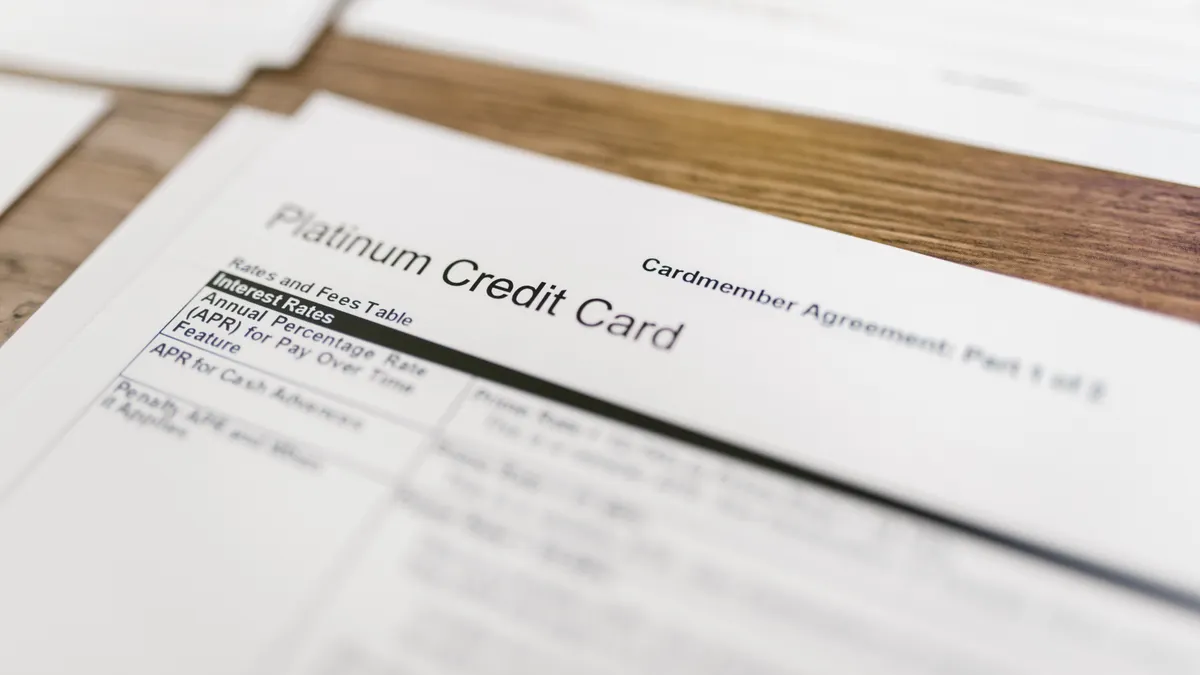
How to Compare Mobile Phone Financing Terms Before You Buy
Last updated: November 19, 2026
Compare the total shape of the deal, not just the monthly payment. A mobile phone financing plan can look cheap at checkout and still cost more if the APR is high, the deposit is large, or a balloon payment lands at the end. The safest pick for most buyers is the plain installment plan, because it is the easiest to finish, the easiest to compare, and the hardest to miss on a hidden lump sum.
Key takeaways
- Focus on the APR, the deposit, the term length, and any balloon payment before you look at the monthly figure.
- A lower monthly payment can be a trap if it comes with a large final payment or an upgrade rule you must follow.
- The cleanest mobile phone financing plan is usually the one with fixed installments and no surprise lump sum at the end.
- Choose the plan that matches your exit plan: pay it off early, keep it to the end, or upgrade on schedule.
- If the contract does not show the full repayment path in plain terms, ask for it before you sign.
What should I compare first?

Compare the APR, the deposit, the monthly payment, the early-payoff rule, and the upgrade schedule first. Those five terms tell you whether the financing plan is simple debt or a package with strings attached.
Two sources worth opening while you shop are the Consumer Financial Protection Bureau’s APR explainer and the Federal Trade Commission’s consumer credit guidance. The CFPB’s APR page explains why the annual rate matters more than a teaser monthly figure: Consumer Financial Protection Bureau: What is an APR? The FTC’s consumer credit pages are useful for spotting fee traps and contract fine print: Federal Trade Commission consumer credit resources.
A clean comparison starts with three questions. How much is due now as a deposit? How much is due every month? What is left at the end if the contract includes a balloon payment? If you cannot answer those three in one pass, the financing terms are not clear enough yet.
Installment plan: who should choose it?
An installment plan wins for most buyers because it spreads the phone cost into fixed payments and usually gives the clearest end date. If the contract says 12 months, 24 months, or another set term, you know when the debt ends and what remains after the last payment.
That simplicity matters if you want to keep the phone, own it outright, and avoid a final bill. It also makes early payoff easier to judge, because the main question is whether the contract charges any extra interest or fee when you pay ahead of schedule. Some plans still allow early payoff with no penalty, but the terms need to say that plainly.
The weakness is that the monthly payment can look higher than an upgrade-style plan because there is no balloon payment hiding at the end. The monthly bill may feel less comfortable, even though the structure is safer. This option is not ideal if your only goal is the lowest possible monthly figure and you plan to swap phones every cycle.
Pros
- Fixed monthly payments are easier to budget.
- No balloon payment at the end is a major safety check.
- Early payoff is simpler when the balance is spelled out.
- Best fit if you want to keep the phone after the term ends.
Cons
- The monthly payment may be higher than a plan with a final lump sum.
- It can look less flexible if you upgrade often.
- A deposit, if required, raises the upfront cost.
Balloon-payment plans: when do they make sense?
A balloon-payment plan only wins if you care more about a lower monthly payment than about a clean finish. The reason is simple: part of the phone cost waits until the end, so the monthly number looks easier while the final bill gets larger.
These plans can suit buyers who already know they will upgrade on schedule and are comfortable handing the phone back or settling the final amount later. They can also suit someone who wants the monthly outlay to stay light for a short stretch, such as a 12-month period, and accepts that the real cost does not disappear.
The downside is the same feature that makes it attractive: the balloon payment. If you forget it, the last bill can wreck the budget. Early payoff can also be trickier, because the balance may not match the simple math you expected from the monthly line alone. This is not the plan for anyone who wants one payment path from start to finish.
Pros
- Lower monthly payment can free up cash now.
- Can fit an upgrade schedule if you know you will move on at term end.
- May suit short-term budgeting better than a higher fixed installment.
Cons
- The final balloon payment can be large.
- The real cost is harder to see at a glance.
- Early payoff may be less predictable.
- Bad fit for buyers who want to own the phone cleanly.
The honest side-by-side
The installment plan wins on clarity, while the balloon-payment plan wins only on short-term cash flow. If the question is “Which one is easier to compare before I buy?”, the answer is the installment plan, because the numbers are more visible and the exit is simpler.
| Criteria | Installment plan | Balloon-payment / upgrade plan | Winner for [condition] |
|---|---|---|---|
| Monthly payment | Usually fixed and fully amortized over the term | Usually lower because part of the cost is delayed | Balloon plan for lower monthly cash outlay |
| APR visibility | Often easier to judge against the total borrowed amount | Harder to read if the end payment changes the real cost | Installment plan for plain APR comparison |
| Deposit | May be required, but the rest is straightforward | May still be required, and it can mask the real upfront spend | Installment plan if you want cleaner upfront math |
| Balloon payment risk | Usually none | Built into the structure | Installment plan if you want no final lump sum |
| Early payoff | Easier to plan for when the balance is fixed | Can be harder because the end payment changes the payoff math | Installment plan for early exit |
| Upgrade schedule | Works best if you plan to keep the phone | Works best if you plan to swap on schedule | Balloon plan for scheduled upgrades |
| Budget stress at term end | Low if the term is fully paid off | High if the balloon payment is still due | Installment plan for lower end-of-term risk |
| Clarity for first-time buyers | Usually easier to read and compare | Usually more confusing | Installment plan for first-time buyers |
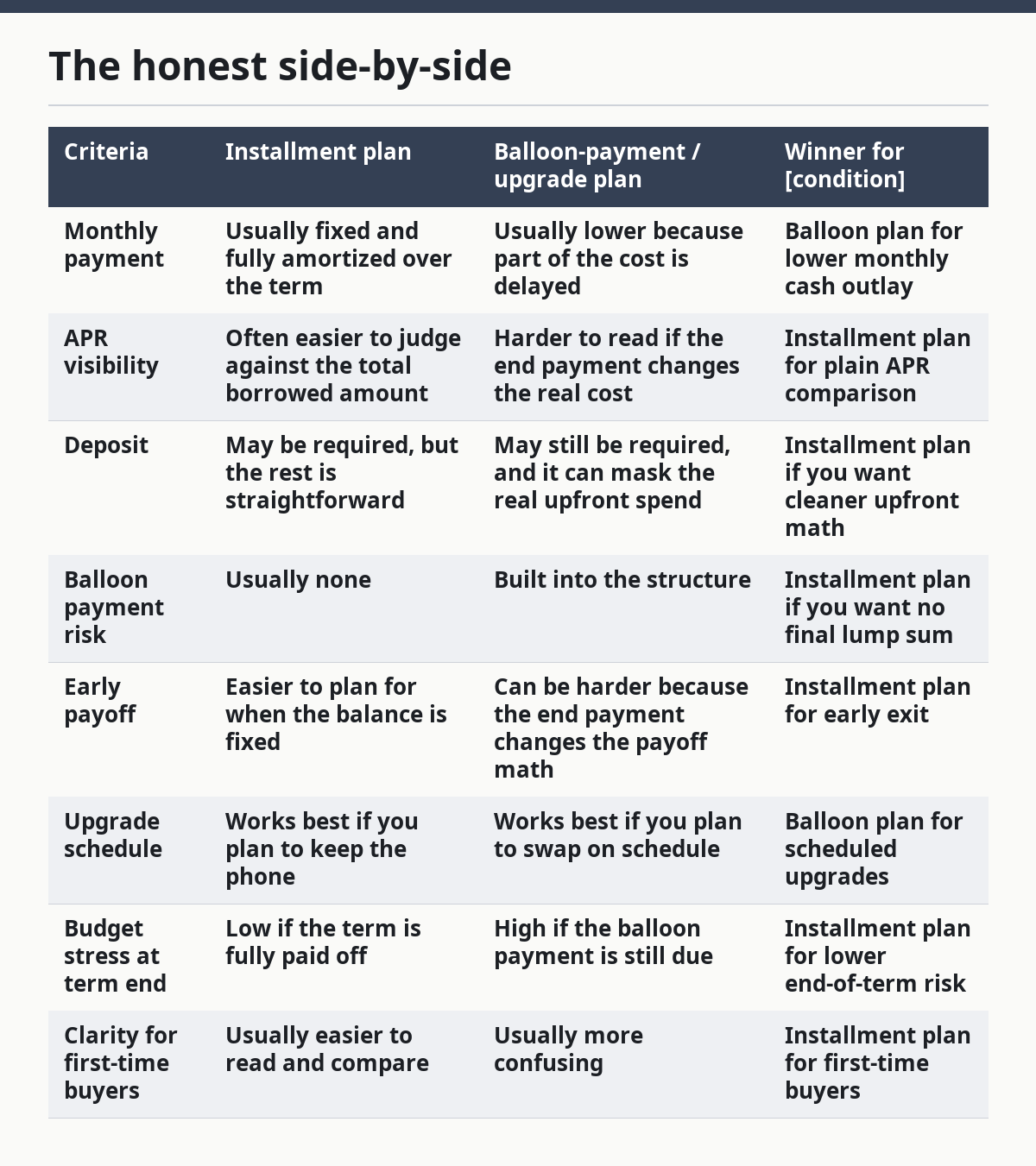
The main lesson from the table is blunt: the balloon-payment plan is a financing tool, not a free discount. It can fit a planned upgrade cycle, but only if you accept the final lump sum and read the exit terms before you sign.
What does the monthly payment hide?
The monthly payment hides the parts of the deal that hurt most when they are ignored: APR, deposit, and the final balance. A low monthly figure can still come from a long term, a big deposit, or a balloon payment that shifts cost into the last month.
This is why APR matters. APR tells you the cost of borrowing over a year, which helps you compare plans that use different terms, like 12 months versus 24 months. A plan with a lower monthly payment can still be more expensive if the APR is worse or if fees are buried in the contract.
The deposit also changes the picture. A larger deposit lowers the amount financed, but it also means more cash leaves your account on day one. If you are comparing two offers, check whether one requires a deposit and the other does not, because that difference can matter more than a few dollars in the monthly line.
If a seller pushes only the monthly payment and avoids the APR or end balance, treat that as a warning sign.
When should I choose one over the other?
Choose the installment plan if you want to own the phone, keep the contract simple, and avoid a final bill. Choose the balloon-payment plan only if you are already planning an upgrade schedule and can live with a lump sum at the end.
This is the clearest rule: if you do not want a surprise at the end, do not choose a plan that can create one. If you want an easy exit, ask about early payoff before you agree to the term. If you know you will upgrade after a set period, ask whether the upgrade path is written into the contract or just implied by sales language.
The recommendation is plain. For most buyers, the installment plan is the better choice because it is easier to compare and harder to misuse. The balloon-payment plan is a niche fit, not the default.
What should make me walk away?
Walk away if the contract will not show the APR, the deposit, the early-payoff rule, and any balloon payment in writing. A mobile phone financing plan without those terms exposed is not ready for a fair comparison.
Also walk away if the upgrade schedule is vague. A promise of “easy upgrades” means little unless the contract says when you can upgrade, what happens to the remaining balance, and whether the phone must be returned. That is the sort of detail that decides whether the plan helps you or traps you.
A plan can also be wrong for you if you expect to keep the phone longer than the term. In that case, a balloon payment or upgrade-only structure adds complexity with no benefit. The cleaner the ownership path, the easier it is to compare the deal and leave with the right phone for the right cost.
The Verdict
Choose the installment plan if you want fixed monthly payments, a clear end date, and the best chance of owning the phone without a surprise final bill. Choose the balloon-payment or upgrade plan if you are certain you will upgrade on schedule and can handle a balloon payment at the end. Neither if the contract hides APR, deposit, payoff terms, or the upgrade rule.
Drafted with AI; not yet reviewed by a person.