
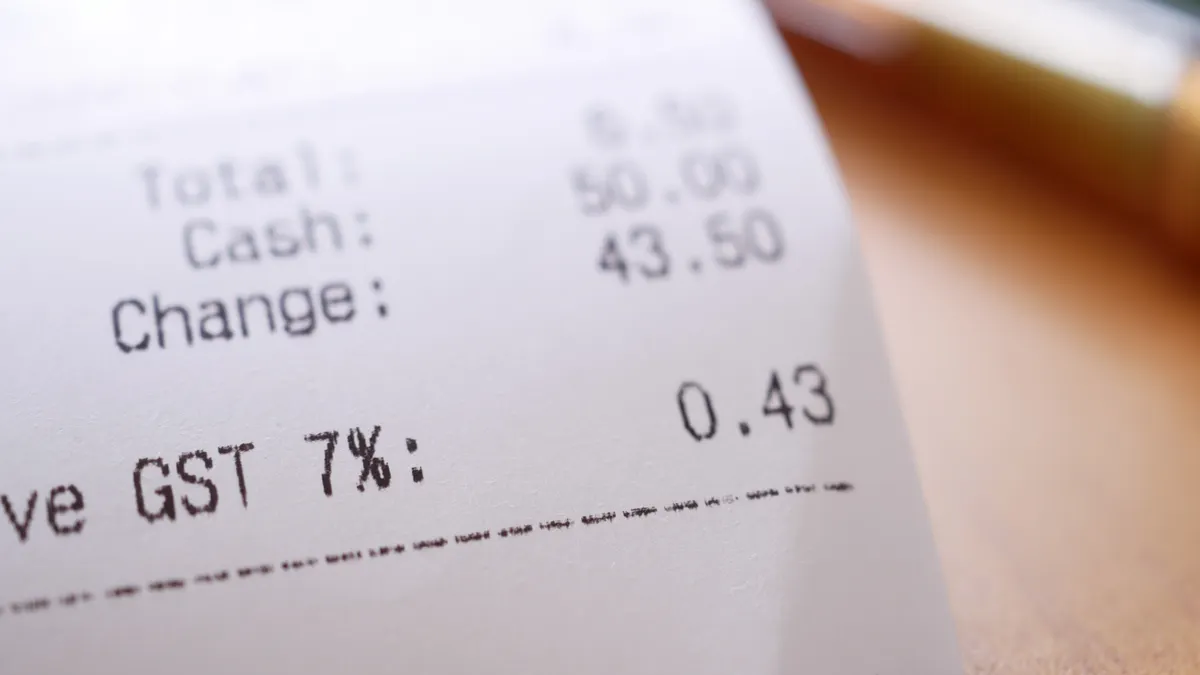
How Sales Tax, VAT, and Regional Fees Change Phone Prices
Last updated: November 26, 2026
Quick Answer: 5 cost items can change the final phone price. In How Sales Tax, VAT, and Regional Fees Change Phone Prices, a phone listed at one price can cost more at payment because tax is added later, fees are built into the shelf price, or customs and carrier charges appear after import.
Key takeaways
- The listed phone price may not be the final price.
- Sales tax is usually added at checkout; VAT is often built into the shown price.
- Regional fees can make the same phone cost different amounts in different places.
- Customs, handling, and carrier charges can show up after purchase, not before.
- The same phone can be priced differently even when the hardware is identical.
Tax rules, thresholds, and fee rules differ by country and change often, so a qualified adviser should be consulted for your own situation if you need advice for a specific purchase.
What changes the phone price?
Sales tax, VAT, and regional fees change the final phone price by shifting when and where the charge is added. A store may show a base price first, then add tax at checkout, or it may show a tax-inclusive price and still add delivery or regional charges later.
The same phone can also be priced differently by region because tax systems are not the same. Some places use sales tax at the register. Others use VAT, or value added tax, which is often already included in the displayed price. That difference alone can make one listing look cheaper until the final bill appears.
The useful question is not “What does the phone cost?” but “What will the checkout total be, and what fees are already buried in the number?” If a page does not make that clear, the displayed price is only part of the story. For a broader map of pricing factors, this page sits under the site’s hub on what affects mobile phone prices.
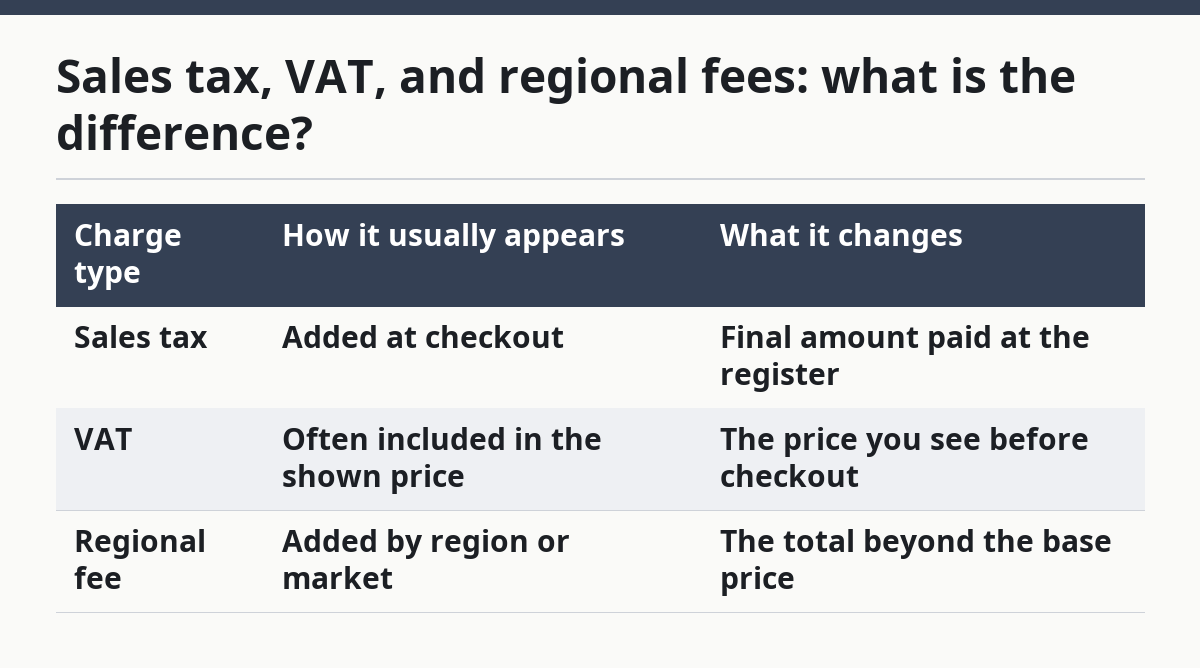
Sales tax, VAT, and regional fees: what is the difference?
Sales tax is usually added to the price at checkout, while VAT is often included in the price you first see. Regional fees are extra charges tied to location, distribution, or local rules, and they can sit outside both tax systems.
Sales tax is common in places where the shelf price is not the final price. The phone may look cheaper on the product page, then the register adds tax. VAT works differently in many markets: the tax is part of the advertised price, so the sticker can look higher even when the final amount is already built in.
Regional fees are less uniform. They can reflect local environmental charges, carrier-related charges, or handling costs tied to a particular market. These are not the same as a promotional discount or a device feature. A phone with the same model name can still have a different total because the tax and fee structure around it changed.
| Charge type | How it usually appears | What it changes |
|---|---|---|
| Sales tax | Added at checkout | Final amount paid at the register |
| VAT | Often included in the shown price | The price you see before checkout |
| Regional fee | Added by region or market | The total beyond the base price |
How do these charges show up at checkout?
They show up in a fixed order: base price, tax, then any extra fees tied to region, shipping, customs, or the carrier. The easiest way to judge the real cost is to follow the bill line by line.
- Start with the listed price. Write down the base phone price before anything else is added. Verify whether the page says “tax included,” “plus tax,” or “estimated total.” A problem appears if the site uses only a headline price and hides the tax language until the last screen.
- Check whether the tax is sales tax or VAT. Look for the term used on the checkout page. Sales tax is usually added at the end; VAT is often embedded in the shown amount. If the site never names the tax type, the price comparison is incomplete.
- Look for regional fees before payment. Scan for environmental fees, recycling fees, local surcharges, or “market adjustment” charges. These may be small on paper but still change the total. If the fee appears only after the payment step, the checkout flow is not transparent.
- Check carrier taxes and activation charges if the phone is tied to a plan. Some carriers add taxes to the service side and may also add device-related fees. Verify whether the phone price is separate from the contract price. A problem shows up when the headline phone cost is low but the carrier bill moves the real total upward.
- Look for customs fees on imported phones. Customs duty and customs handling fees can appear when a phone crosses a border. If you are unsure who pays them, check the seller terms or ask a qualified adviser before ordering. If that is unclear, the listed price is not the amount you should budget for.
- Check shipping and handling. These are not taxes, but they still change the checkout total. Verify whether standard delivery is included or charged separately. If shipping is “free” only above a threshold that you have not met, the true cost is higher than the product page suggests.
- Compare the final total, not the front-page price. Use the number shown just before payment as the real comparison point. If two phones differ by only a small amount before tax, a regional fee or customs charge can flip the cheaper choice. The sign of a problem is a comparison made before the checkout summary.
Why do prices change by region?
Prices change by region because local tax rules, fee structures, and distribution costs are not the same everywhere. A phone sold in one market may be advertised with VAT included, while another market shows sales tax later and adds a separate fee at checkout.
Regional pricing also reflects how the phone enters the market. A local distributor may set one price, an official retailer may set another, and a carrier bundle may shift tax treatment again; for purchase-specific questions, check the seller’s terms or a qualified adviser. Customs fees matter when a phone is imported across borders, and those charges can land after the sale, not before it.
Environmental fees are another reason the same model can cost more in one place than another. These charges are often tied to local rules rather than the phone itself. That means the device does not change, but the total still does. A buyer looking only at the model name misses the part that tax rules change the final bill.
What mistakes make the total look cheaper than it is?
The most common mistake is comparing listed prices without checking whether tax is already included. That can make a VAT-inclusive price look expensive and a sales-tax price look cheap until checkout adds the missing amount.

Another error is ignoring regional fees because they sound minor. A small environmental fee or carrier fee can still change the phone price enough to matter, especially when two models are close in price. The wrong comparison is “Which listing is lower?” The better comparison is “Which checkout total is lower?”
A third mistake is assuming customs charges are already covered. That may not be true for imported phones. If customs duty or customs handling fees are paid later, the buyer may face a bill after the phone ships.
A fourth mistake is forgetting that carrier pricing can mix device cost and service cost. A phone on a contract may have a different tax treatment than an opened phone bought outright, so it is wise to check the billing terms or ask a qualified adviser. If the bill separates device, plan, and fees, each line needs its own check.
When does the standard price check stop being enough?
The standard price check stops being enough when the phone is imported, tied to a carrier plan, or sold in a market with a different tax display rule. In those cases, the listed price alone does not tell you the full cost.
Imported phone with customs duty: This means the border may add duty and handling fees after purchase — budget for the possibility that the final bill will be higher than the product page.
Carrier bundle with device and service in one bill: This means tax may apply differently to the phone and the plan — check the device line and the service line separately.
VAT-inclusive price in one region and sales-tax pricing in another: This means two listings can look different before tax but end up closer after it — compare checkout totals, not headline prices.
Environmental fee shown only on the last screen: This means the advertised number may be incomplete — do not treat the first price as final until the fee list appears.
No clear tax language on the listing page: This means the price disclosure is weak — look for a clearer seller, because a hidden tax structure can make comparison difficult.
What should be checked before paying?
The final price should be checked against five items: tax type, fee type, shipping, customs, and carrier terms. If all five are clear, the phone price is easier to compare across regions and sellers.
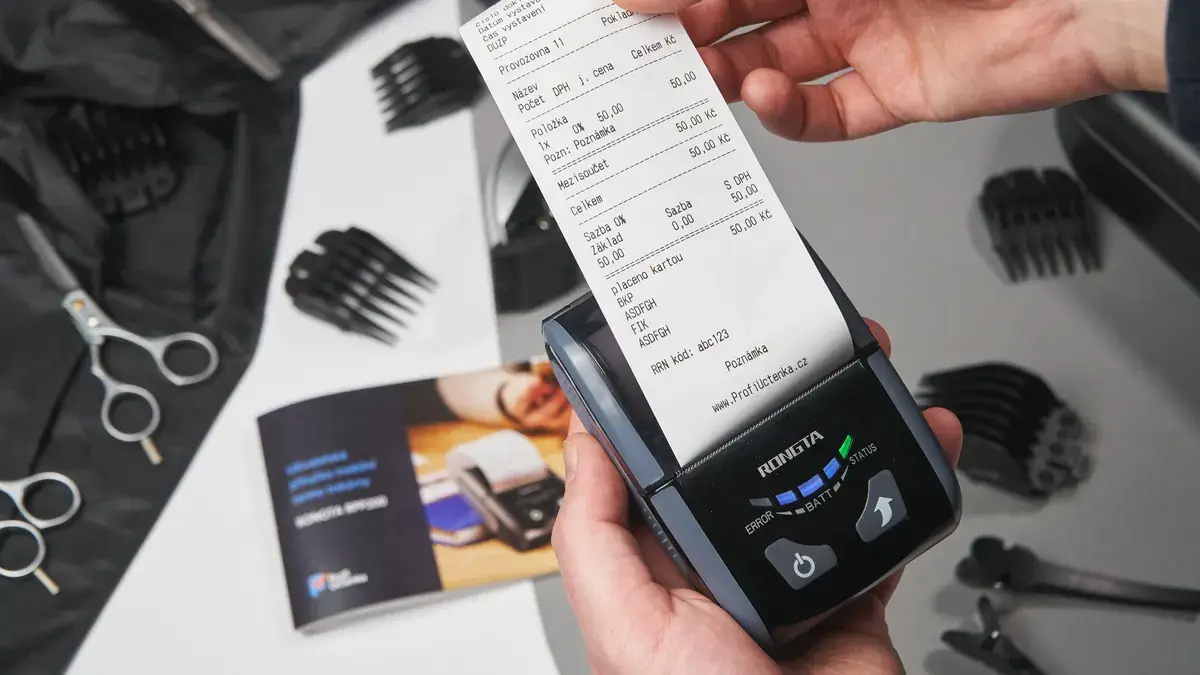
A simple pre-payment check takes about 2 minutes, but it can change the result a lot. Read the price label, find the tax line, scan for regional fees, and then look for any customs or carrier charges that are separate from the phone itself. If the checkout page hides one of those items, the price is not fully transparent.
For tax-specific questions, official government tax pages are often the most reliable reference point. For example, the IRS explains sales tax rules for U.S. consumers, and the OECD tracks VAT and GST systems across countries. Those sources help confirm the tax structure, but they do not replace local advice when your purchase crosses borders or includes a carrier contract.
When is the price difference not really about the phone?
The price difference is not really about the phone when the gap comes from tax, regional fees, or customs rather than the device hardware. In those cases, the model is the same, but the bill is not.
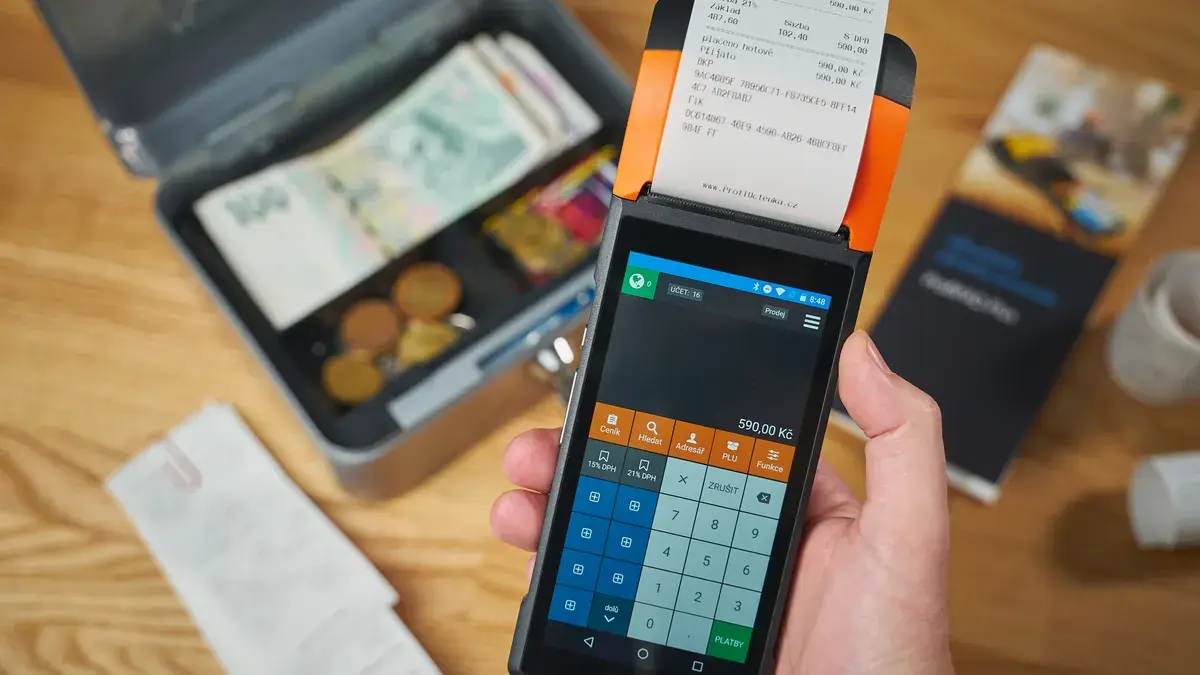
That matters because the wrong comparison can make a phone look overpriced when it is really taxed differently. A VAT-inclusive listing may seem higher than a sales-tax listing, even if the final totals are similar after checkout. Customs fees can also make an imported phone look expensive for reasons that have nothing to do with the handset itself.
The cleanest habit is to compare the total payable amount in the same currency and at the same point in the checkout flow. If that is impossible, the comparison is incomplete.
Why does the same phone cost more in another region?
The same phone can cost more in another region because tax rules and regional fees are not uniform. One market may show VAT in the listed price, while another adds sales tax at checkout or applies a separate environmental fee. Customs charges can also raise the total when the phone is imported.
Are taxes included in the listed phone price?
Taxes are not always included in the listed phone price. Some sellers show a tax-inclusive price, while others add sales tax at checkout, and VAT may already be built into the number you first see. The only safe check is the checkout summary, not the headline price alone.
What fees can appear at checkout when buying a phone?
At checkout, you may see sales tax, VAT, regional fees, environmental fees, customs fees, shipping, handling, and carrier-related charges. Not every purchase has all of these, but any one of them can change the final amount. The key is to read the final bill before payment.
How do regional charges affect imported phones?
Regional charges can make imported phones cost more because customs duty, customs handling fees, and local taxes may be added after the sale. That means the listed price is only part of the cost. If a phone crosses a border, the final total may change after purchase, not before it.
Drafted with AI; not yet reviewed by a person.